Hey there, friends! I’ve been caught up in a whirlwind of activity and completely forgot to post last week! Life’s been a bit crazy at our house ever since Hurricane Debbie made her way through Florida. While we’re incredibly grateful that our damage wasn’t as bad as some, we’re still scratching our heads, trying to figure out why our home got hit the way it did. Fingers crossed we get some answers soon!
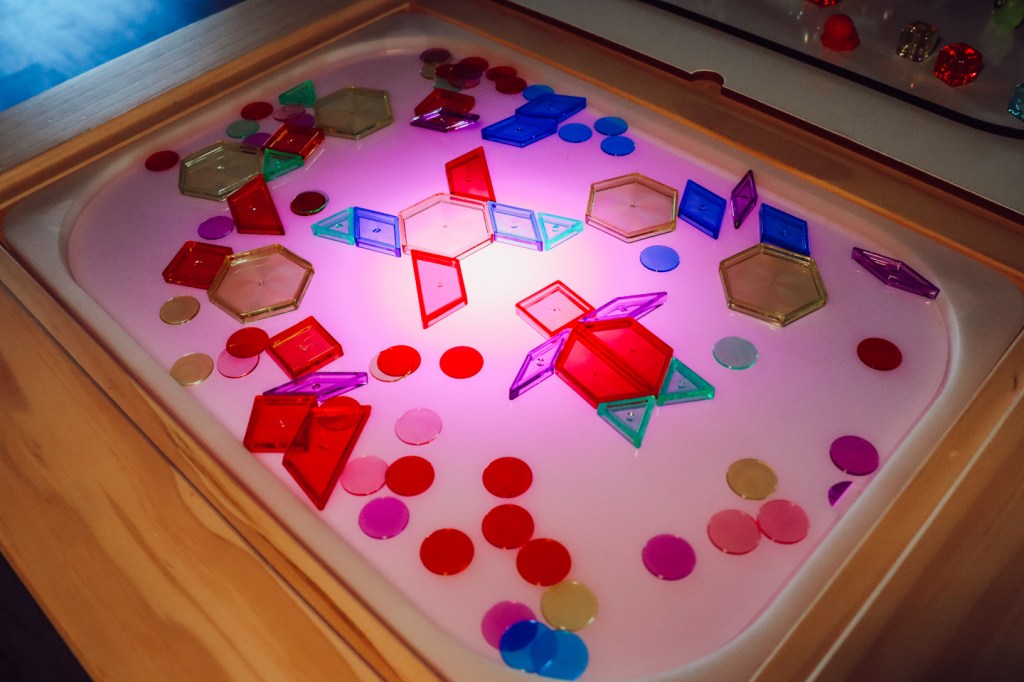
But let’s shift gears to something a little more fun—today’s blog post is all about the wonderful world of sensory tables and bins! A few months ago, we got our hands on an IKEA Flisat Sensory Table, and let me tell you, it’s been a game-changer. I only wish we’d gotten it sooner! From creative play to hands-on learning, this table has become a centerpiece in our home, and we’re excited to share how we use it for everything under the sun. So, let’s dive in and explore the endless possibilities these amazing sensory tables offer for kids!
What are sensory bins?
Sensory bins are like mini treasure chests filled with all sorts of goodies that spark curiosity and fun! Imagine a box brimming with colorful rice, shiny beans, squishy tapioca pearls, rough pasta, and even some water or sand. These bins are designed to ignite your child’s senses of touch, sight, sound, and sometimes even smell and taste. With a mix of textures and surprises, sensory bins turn playtime into an exciting adventure of hands-on exploration! We just began incorporating sensory bins into our homeschool routine as I wanted something to benefit his sensory needs and creativity. During school with Phoenix, I’ve noticed how much more engaged he becomes, especially during daily school lessons, when we incorporate different sensory bin activities. These bins make his learning process more fun and interactive, transforming education into an enjoyable and captivating experience.
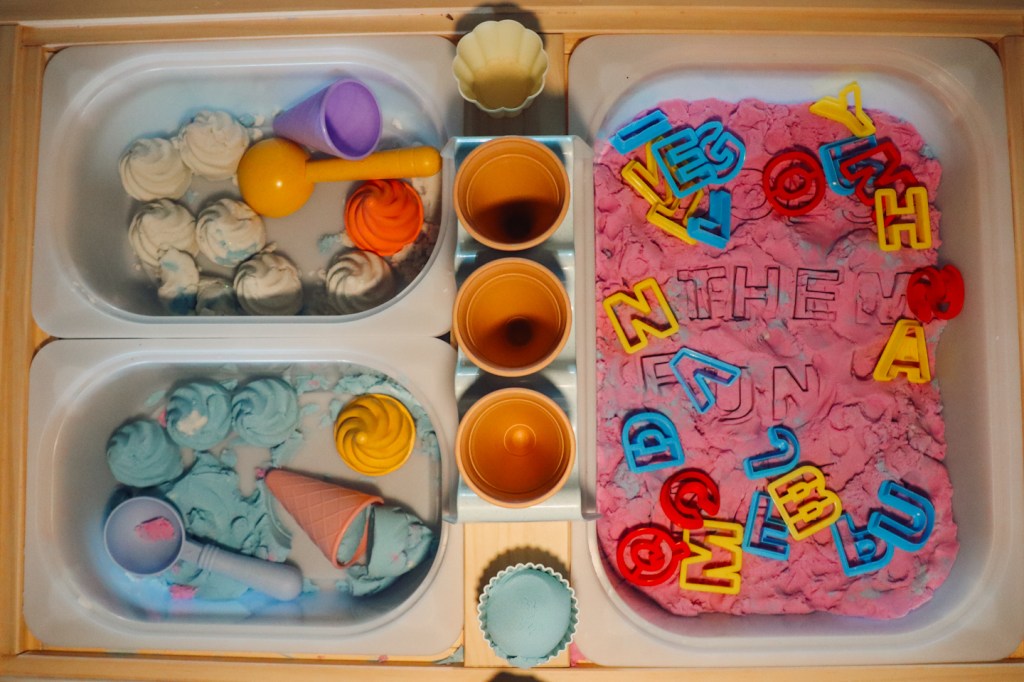
We’ve been having so much fun incorporating our sensory table into Phoenix’s school routine! It’s amazing how this simple setup can make learning feel like playtime. One of our favorite activities is using kinetic sand and alphabet letters to spell out words—it’s a tactile way to build literacy skills. We also turned the table into an ice cream shop to learn about patterns; we made scoops of “ice cream” in different sequences, which made mastering patterns deliciously fun!
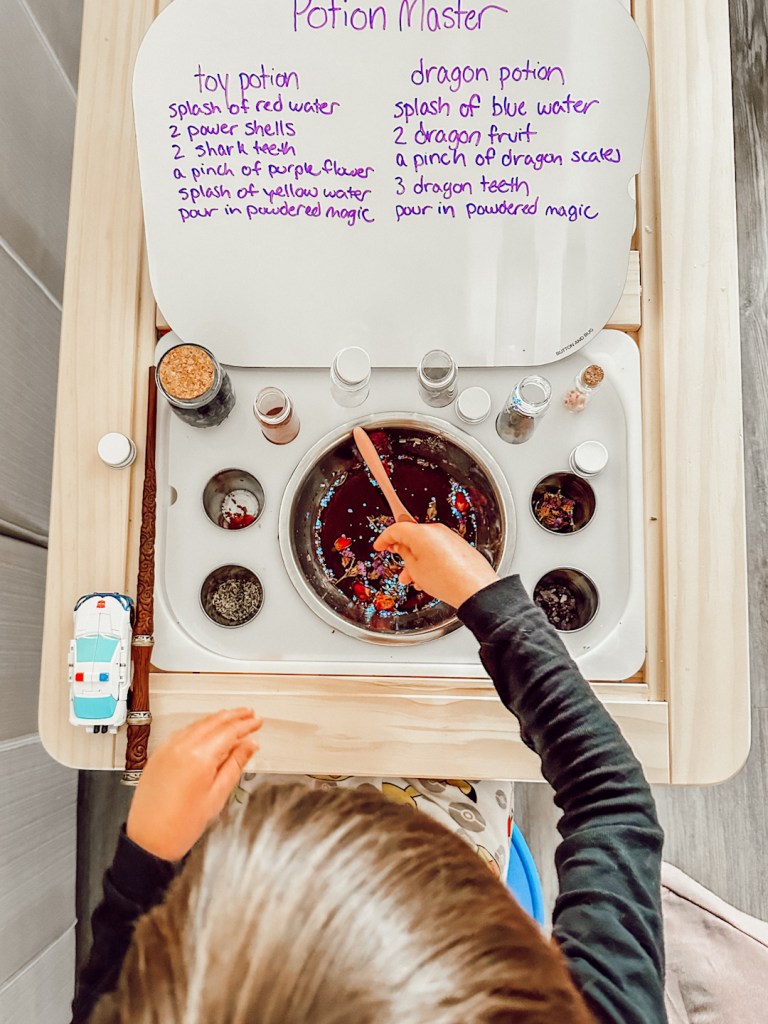
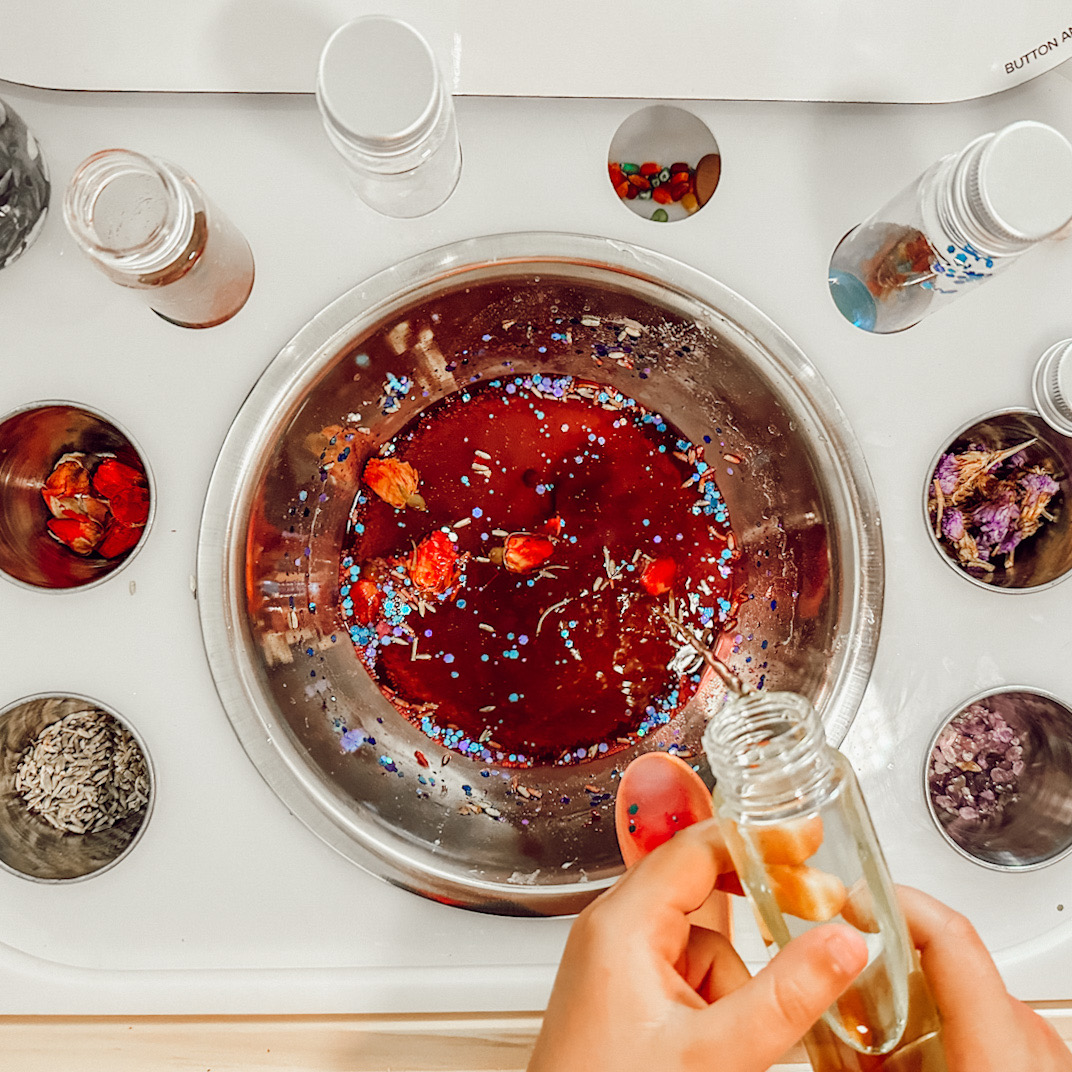
But the real magic happens when we play Potion Master. We mix herbs, shark teeth, shells, baking soda, vinegar, and different colored liquids to create “potions” that bubble and fizz with excitement. It’s a hands-on way to dive into color theory, basic science principles, math, and even the art of following a recipe. We ordered the Potion Master board from Button & Bug, which comes with a stainless steel mixing bowl, four stainless steel cups, and four flat-bottomed test tubes for pouring and mixing potions. We absolutely love this setup! It’s so much fun that we’re going through baking soda and vinegar like crazy—we definitely need to stock up!
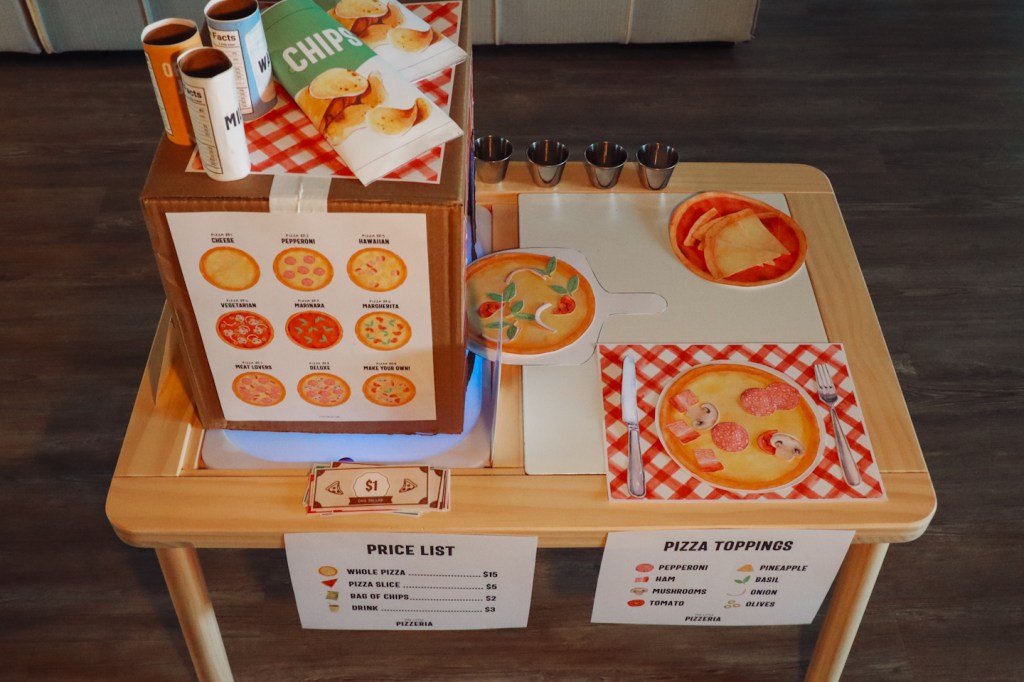
And who doesn’t love pizza? We transformed the table into a pizza shop, where Phoenix takes orders, adds up the cost, and then creates a pizza masterpiece. It’s such a fun way to practice math and creativity!
I’m constantly finding new ways to weave education into play, and this table has made it so easy and enjoyable for both of us. The possibilities are endless, and I can’t wait to see what we come up with next!.
Why Sensory Bins Are Great for Kids of Any Age
1. Develop Fine Motor Skills: Playing with small items like beads, rice, or pasta helps children practice their pincer grasp and improve their hand-eye coordination.
2. Enhance Cognitive Development: Sensory bins promote problem-solving skills and creativity as children explore, sort, and classify different materials.
3. Encourage Language Skills: Describing textures, colors, and activities can boost vocabulary and communication skills.
4. Provide Sensory Integration: Sensory play can help children process and respond to sensory information, which is particularly beneficial for kids with sensory processing disorders.
5. Promote Focus and Calm: The repetitive nature of sensory play can have a soothing effect, helping children to relax and concentrate.
Why Sensory Bins Are Important
Sensory bins offer a treasure trove of benefits that go way beyond just keeping kids entertained. They deliver a rich sensory experience that’s like a workout for the brain, helping to build those all-important neural connections that boost learning and memory. By engaging multiple senses at once, sensory bins supercharge brain development. Plus, they’re fantastic for emotional growth, giving kids a safe space to express and process their feelings. For children with sensory issues, these bins are a game-changer, offering a fun and gentle way to explore different textures, sounds, and sights, helping them become more comfortable with sensory input. My oldest daughter Ariana had sensory issues as a child and these sensory bins would’ve been a game changer for her. She hated the feel of grass, dirt, textures.. everything overloaded her senses. It took a long time for her to get used to the world around her. Phoenix on the other hand loves to play with different materials. He loves to squish and build with sand, play and count rice and seeds, and create potions that come alive with baking soda! There are so many uses for a sensory bin.. I named a few of our favorite ways to use them up top but here are a few more.
Activities to Use Sensory Bins For
1. Themed Play: Create bins based on different themes like the ocean, coral reef, space, or a farm. Add related toys and materials for immersive play.
2. Science Exploration: Create magic potions and exploding volcanos by using materials like baking soda and vinegar for a simple, hands-on chemistry experiment.
3. Math Skills: Incorporate counting and sorting activities using items like buttons, beads, or small toys. You can also use clear shapes and numbers for different types of math problems.
4. Letter and Number Recognition: Hide letters or numbers in the sensory bin and have children find and identify them.
5. Storytelling: Use small figurines and props to act out stories or scenes from favorite books.
Materials to Use in Sensory Bins
• Dry materials: Rice, beans, pasta, lentils, sand, pebbles
• Wet materials: Water, tapioca pearls, gelatin, slime
• Tools: Scoops, spoons, cups, tongs, funnels
• Small toys: Animals, gems, beads, cars, dinosaurs, action figures
• Natural items: Leaves, pinecones, nuts shells, flowers, and herbs
Looking to add some extra magic to your sensory table? Making your own colored rice and pasta is a fantastic way to do just that! These vibrant, tactile materials are perfect for sparking curiosity and creativity in kids. Plus, they’re super easy to make at home. Whether you’re looking to create a rainbow of rice or a kaleidoscope of pasta, these colorful additions will turn any sensory bin into an irresistible adventure. Ready to dive into some DIY fun? Let’s learn how to make your own colored rice and pasta and bring even more excitement to playtime!
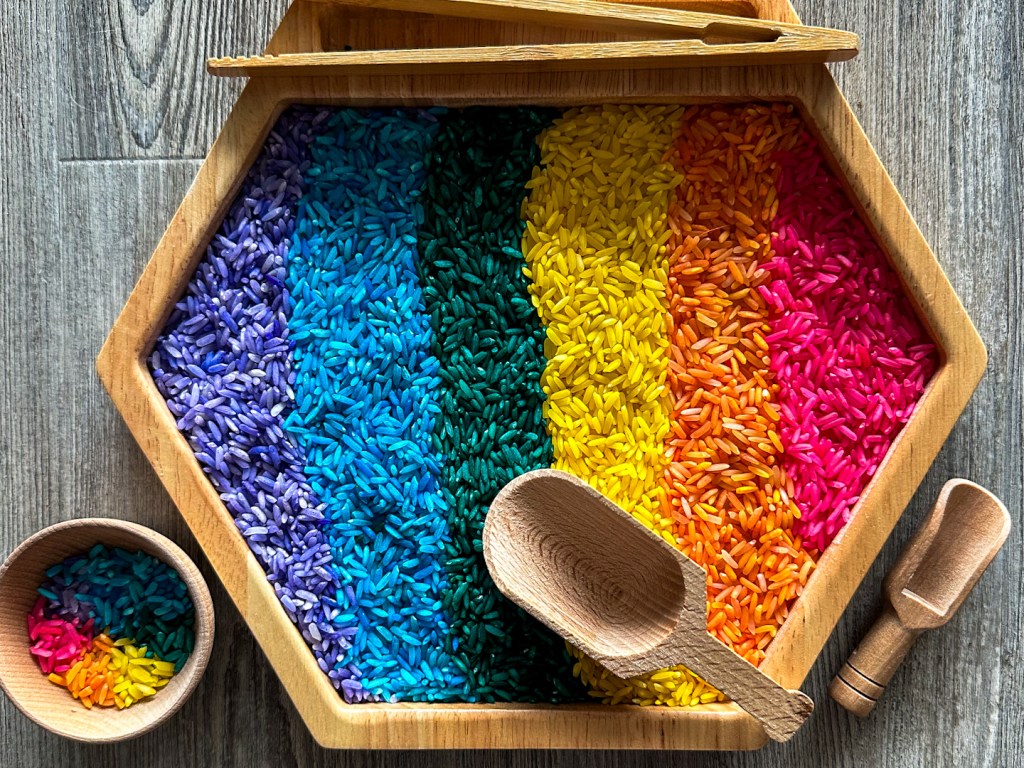
How to Make Colored Rice or Pasta
Colored Rice Recipe:
Ingredients:
– 1 cup of white rice
– 1 teaspoon of white vinegar or rubbing alcohol
– Food coloring
Instructions:

1. Place the rice in a ziplock bag or a large bowl.
2. Add the vinegar or rubbing alcohol. This helps the color adhere to the rice.

3. Add a few drops of food coloring. The more drops, the more vibrant the color.
4. Seal the bag or cover the bowl and shake/mix until the rice is evenly colored.

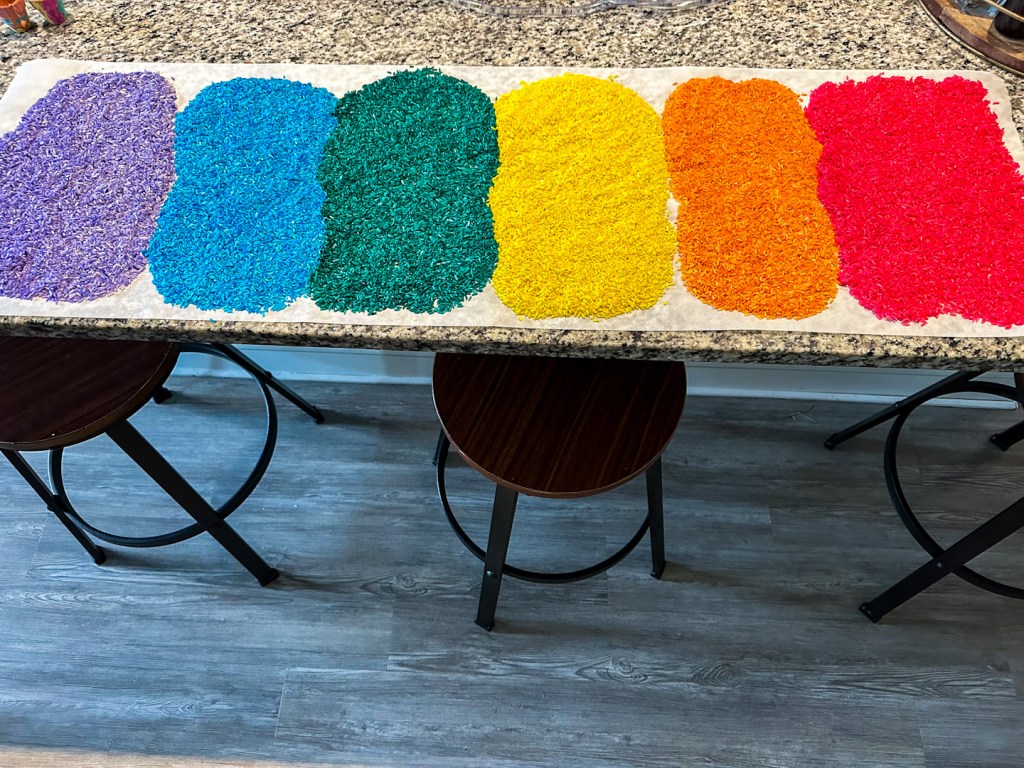
5. Spread the colored rice out on a baking sheet or counter lined with parchment paper to dry. It should take an about an hour to dry completely.
Colored Pasta Recipe:
Ingredients:
– Dry pasta (any shape)
– 1 teaspoon of white vinegar or rubbing alcohol
– Food coloring
Instructions:
1. Place the pasta in a ziplock bag or a large bowl.
2. Add the vinegar or rubbing alcohol.
3. Add a few drops of food coloring.
4. Seal the bag or cover the bowl and shake/mix until the pasta is evenly colored.
5. Spread the colored pasta out on a baking sheet or counter lined with parchment paper to dry. Let it dry completely before use.
How do I store the rice or pasta?
Simply keep in an airtight container when not in use. This will help preserve it for years of endless play!
Do you use sensory bins or tables in your home? Whats your favorite way to use them with your kids? I would love to know how others are incorporating this wonderful tool throughout their day.

 The Wandering Walkers
Leave a comment